

The Past Wearing Thin...
Musings from the Turret: our castle home as a time capsule, building our archives and unexpected international finds...

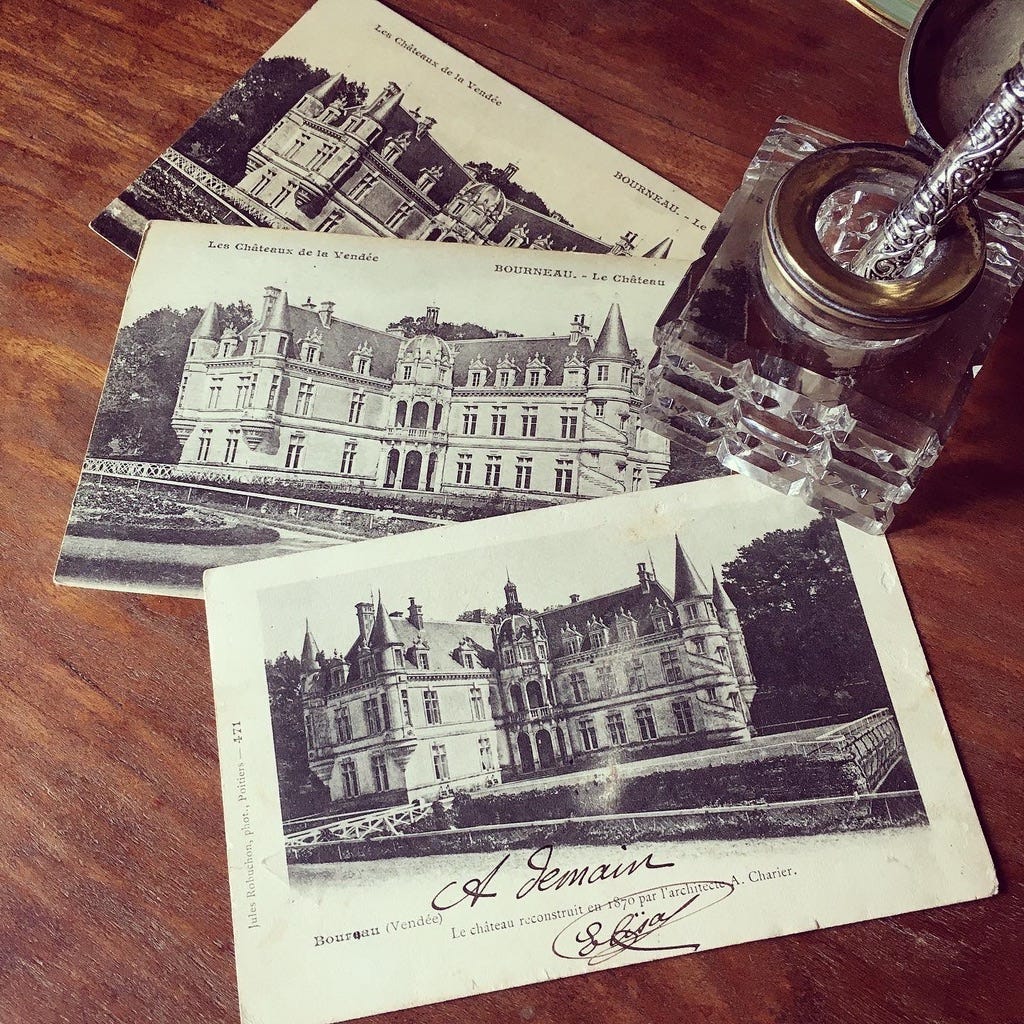
The strange thing about living in a castle is the direct connection with the past that I feel so keenly. Sometimes it feels like we live frozen in time with long abandoned rooms that have been left untouched in decades. Faded wallpaper peels and folds around lost furniture woven in cobweb. In a desk drawer there is still a key no one remembers and a pen still remains where it was last discarded in the moment, with only a velvet of dust to tell us that this moment was many yesterdays ago.
There are also rooms at Château de Bourneau that feel more like a time slip, as if time is wearing thin in some places and a flash of another era might just seep through with a swish of a silk dress or scent of gardenia. It is as if I enter a room in mid-conversation a century ago, hung on a suspended pause, waiting for me to leave before the conversation restarts again.
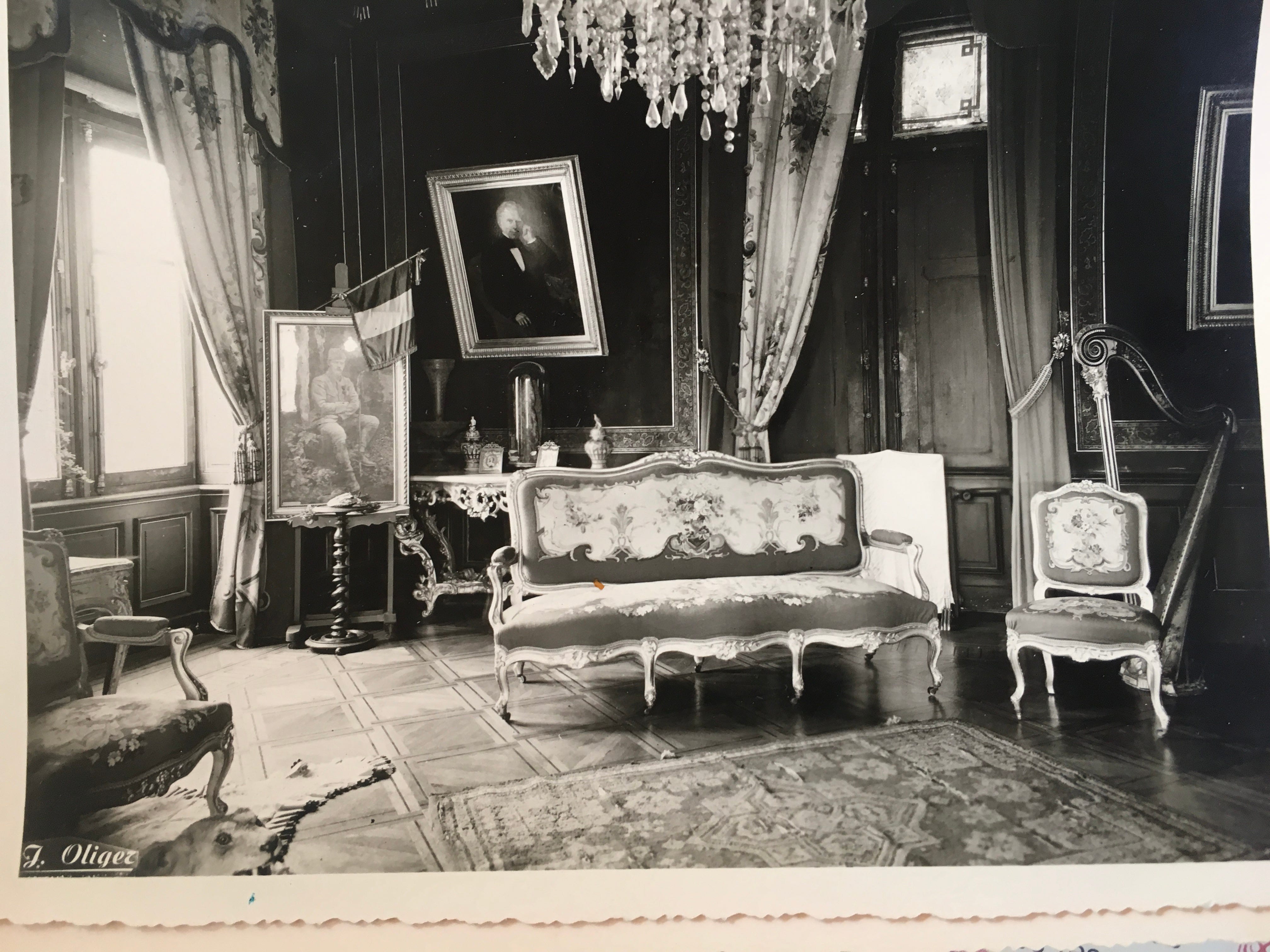
The Red Salon in the West wing is particularly atmospheric, wrapped in shadow with the scent of old pages and beeswax in the air. While it is our private salon, we rarely have time to sit and use it and so it remains in parenthesis, like a time capsule under a whisper of dust. Nothing has changed in this room for 160 years - the same portraits hang in the same positions, gazing down from their lofty panels and hung at an angled lean: the best way to display them in an era of low-lit oil lamps. The old clocks are paused and the few remaining pieces of original château furniture are still there. Even if the grand porcelain ginger jars have been lost decades ago, their lids still remain in the same place, as if marking the ghosts of the jars long gone.
The château ancestors gaze down from the walls as if they are keeping a keen eye on our progress, watching curiously as I mend old pieces of furniture and scrub walls from years of dirt and web. I wonder about them and what they were like as people and how they used these spaces in what is now my home, musing on whether there is a story behind the dent in the parquet or the tiny chip on the grand staircase.
As I round my fingers over the cool carved marble of the fireplace, I’m so sure that I am following the curious fingers of one of our château predecessors over 100 years ago also admiring the beauty and workmanship of a long gone artisan.
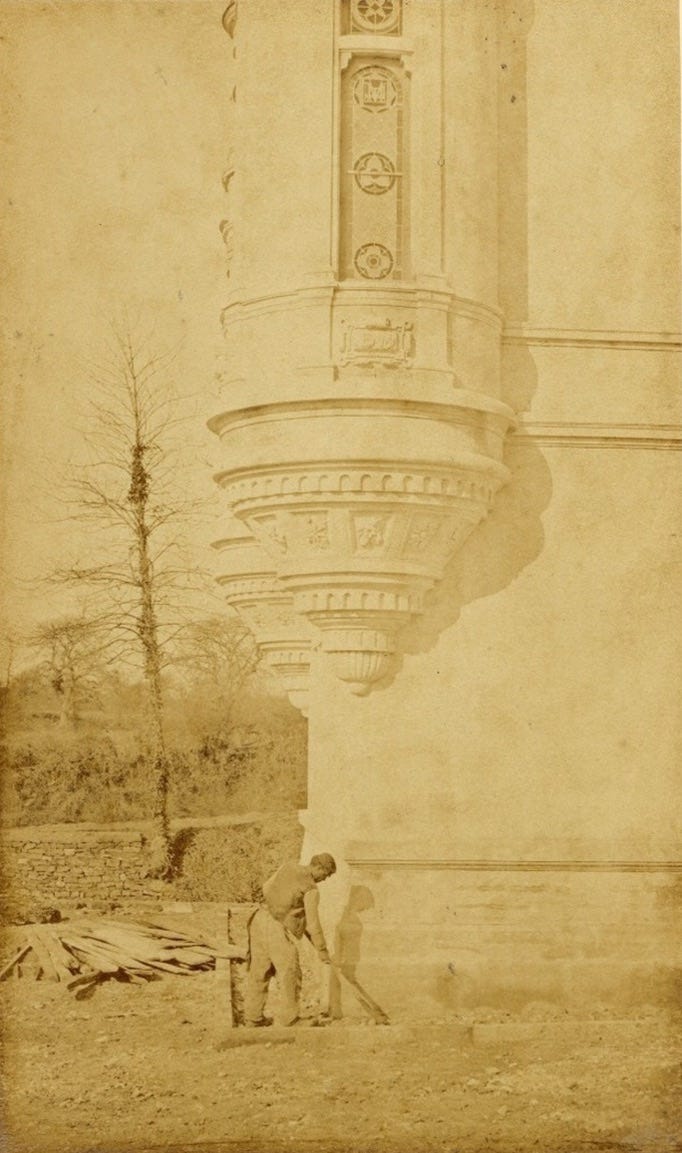
We have so many questions about the history of our home and when we arrived, we were reliant on verbal history and stories we heard from the village, sifting through fact and fiction. I scoured local archives hoping to find architectural drawings that would help us understand the building better and date certain additions but to no avail. And so I set myself on a mission to restart to collect and build them. No official archives seemed to remain regarding the original Château de Bourneau, built in 1466, or even the current château but I am always on the look out for information and slowly but surely it has a curious way of arriving.
One of our friends is the Viscount of our local town’s château and one evening, a photograph tumbled out of an old book in his library that so happened to be of our home during its construction. It was left in a dusty tome as a bookmark by one of his past ancestors and we wonder what else remains to be discovered.
I’ve always loved history and French ephemera and have spent many happy hours scouring vide greniers and brocantes for cartes postales and letters swirled with cursive script to antique books and gravures. You can read about my treasure-hunting here:
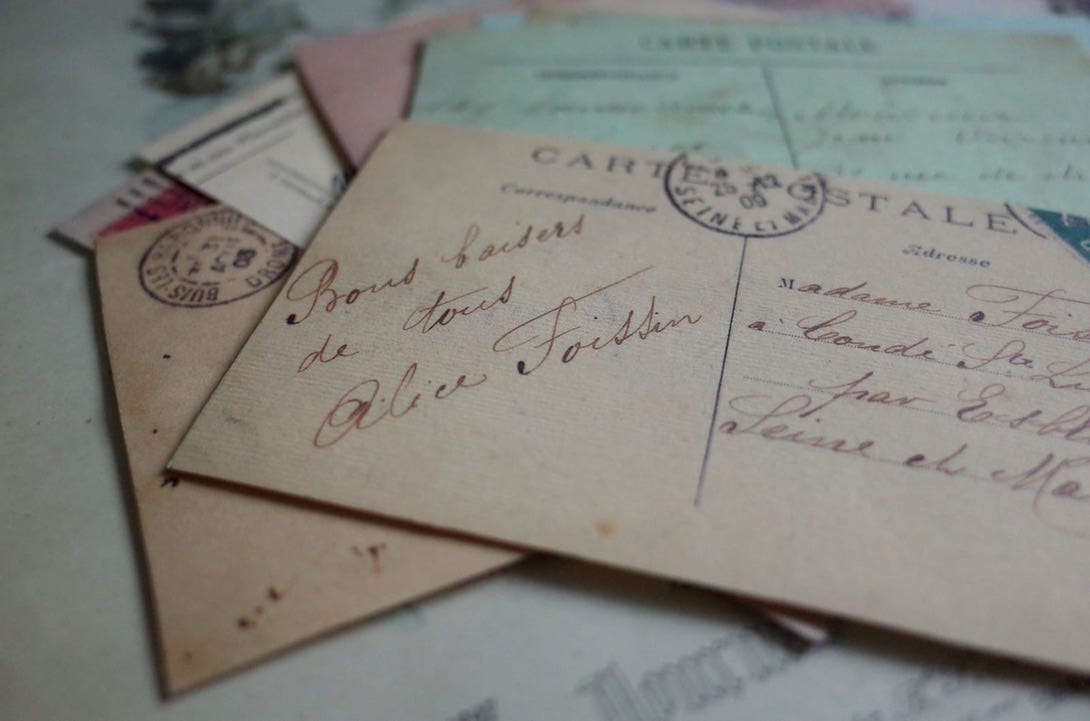
I find that delving into the different historical and cultural world of France is utterly fascinating and I often have this frisson of nostalgia trespassing into another century and into the letters and lives of people long gone. In particular, I am always on the look out for vintage postcards of the château, rifling through old boxes of collected cards in case one of Bourneau lies in wait to be discovered. It’s not just because I find them beautiful and a fascinating insight into social history, learning about the past through the messages sent years ago, these postcards also capture the château in a moment of time and tell us about its structure and how it has been altered architecturally as it has evolved over the last 160 years from a private family home to a military institute in the 1960s. The postcards’ postmark and handwritten dates also provide us with vital clues that help us to estimate when various changes occurred. So far we have been able to narrow down when the chimney alterations and dormer window changes were made and we have also learned that the bell tower was redesigned along with the moat bridge, which we never knew.
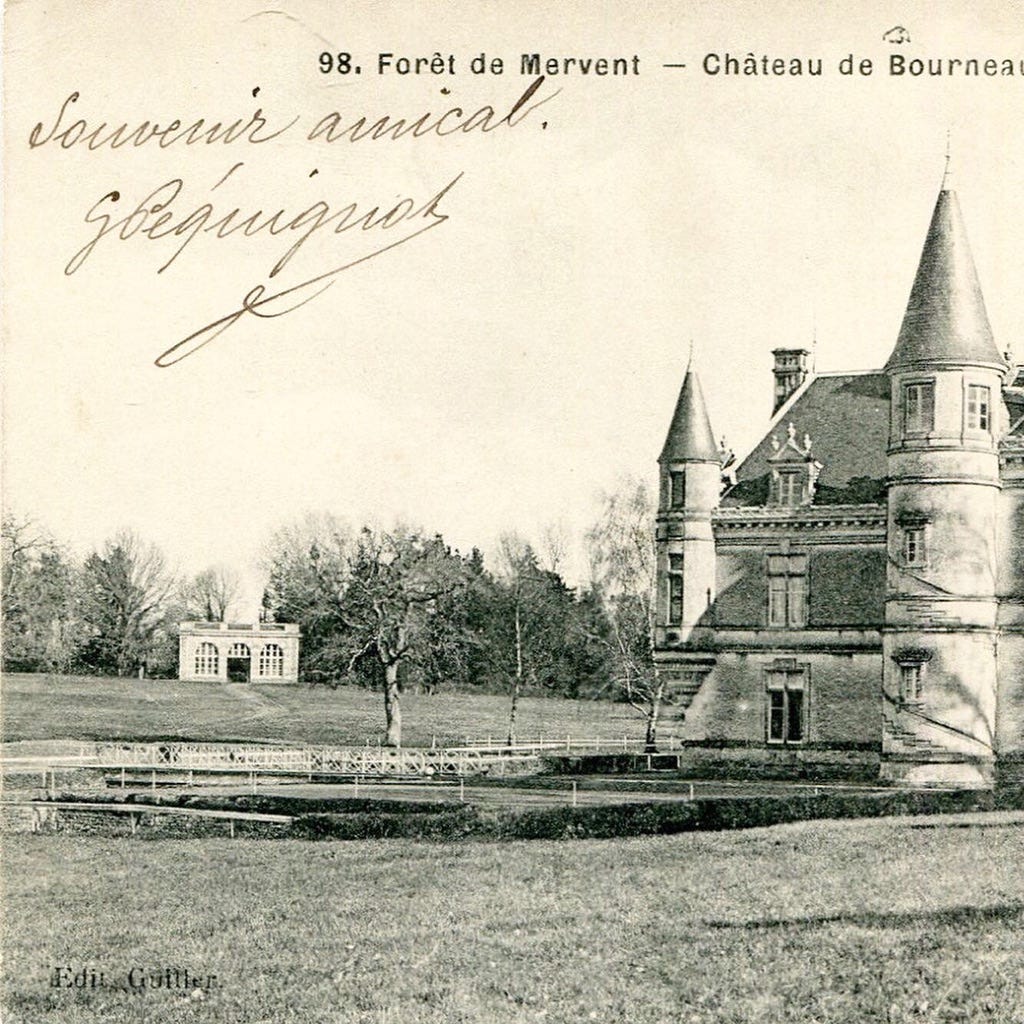
These postcards even tell the story of the evolving landscape gardening and how our ruined orangery looked a century ago, which we could only guess at before. All these details enrich our growing archives and help inform our restoration to bring the château back to its former glory in the most sensitive way as possible and how the original architect, Arsène Charier, designed the château to be viewed, which also includes the landscaping of the grounds.
Unexpected discoveries
My search for these postcards has been a lone game so you can imagine my pleasure when one day, a letter arrived at the château out of the blue from a stranger who had happened upon a postcard of Château de Bourneau from 1905 that had somehow made its way into a dresser in Canada and had kindly thought to return it to France. I wrote about this extraordinary kindness in my social media and then unexpectedly, other kind strangers from all over the world started to join the search and to graciously send us postcards of our home that they had also stumbled across in flea-markets or even family archives. It is amazing to think that photographs of our home can be found in drawers on the other side of the world, posted over 100 years ago when a relative visited our region of Vendée. Little by little I am growing our collection and archives to help preserve the past and inform the restoration of the future.
There is something particular special about French old houses that make dreamers of all of us. I think our guests feel it too, daydreaming of another era in the quiet, sun-drenched afternoons. It is that reassuring sense of permanence in houses that have seen centuries fly by and yet remain impervious to the outside world, frozen in their own time. I love the beauty of the tiny details of French fixtures and fittings, the delicately carved doorknobs, window handles and shutter fastenings shaped like 18th century ladies that escaped the 1970s refurbishments. The hand-carved panelling, ornate ceiling plasterwork and richly patterned parquets speak of another century but they never lose style, even in a 21st century home. I am grateful to each generation that did their part in preserving the château and now it is our turn to be the guardians of the estate for this generation, adding our conversations to the old walls.
And perhaps in another hundred years time, the next châtelains will wonder about us or curse me for my choice of wallpaper!
Best Wishes from Château de Bourneau,
Erin, The Intrepid Châtelaine
You can find previous articles in my archives here.
PS: It is soon time to start my new series. What would you like to hear about? The Burgundy diaries at JB’s organic family farm? French lifestyle? Local history? I am always interested to hear your thoughts.
PPS: There will be a bonus publication this week as a thank you to our kind paid subscribers who directly contribute to the restoration of Château de Bourneau. We are so grateful for your generous support.
What a thrill to receive that postcard! We recently bought a little stone house in an Italian hill town with a 12th-century tower. I get such a feeling of calm when I go up in that tower. It was there centuries before me, and will be there long after I’m gone. It’s like stepping into deep time.
Delightful as always. Thank you for sharing your adventures with us.